How to Write a Resume With AI Without Sounding Like a Robot
AI is genuinely useful for writing a resume. It is fast, it fixes weak wording, and it never gets tired of rewriting the same bullet point. But there is a line, and I have seen a lot of resumes cross it. The second a recruiter thinks "a bot wrote this," you are done.
So let me split this into two parts. What recruiters actually want, and where AI starts to hurt you.
What recruiters actually look for
First, understand how little time you get. Recruiters skim. Eye-tracking studies have shown they spend only a few seconds on a first pass before deciding to read more or move on. You are not being read. You are being scanned.
In those few seconds, they are looking for a short list of things:
- Job titles, company names, and dates they can follow at a glance
- Hard skills that match the role, near the top, not buried
- Proof you did the work, which means results and numbers, not adjectives
- A clean layout they can read without effort
Notice what is not on that list. Clever words. Long summaries about being a passionate, results-driven professional. They have read that line ten thousand times and it tells them nothing. "Cut support tickets by 40 percent" tells them everything.
Where AI helps
Used well, AI is a strong partner. Write your work in plain, messy words first. What you did, what changed, any number you can remember. Then let AI tighten it into a clear bullet. Ask it to match the wording to a specific job posting so the real overlap is easy to spot. Ask it to cut a bullet that is too long. That is the good stuff, and it saves real time.
The key is that you feed it your truth and it just sharpens the wording. You stay in charge of the facts.
Where AI goes too far
Here is where it turns off a recruiter fast.
- Buzzword soup. When every bullet is stuffed with words like synergy, dynamic, and results-oriented, it reads as filler. Recruiters skim right past it, or worse, they trust the whole resume less.
- Fake or vague numbers. AI loves to invent metrics. If you did not actually improve something by 30 percent, do not say you did. It falls apart the moment someone asks about it in an interview.
- Every bullet sounds the same. AI has a rhythm. Strong verb, task, outcome, repeat. One or two like that is fine. Twelve in a row is a tell, and it gets boring to read.
- Walls of text. AI will happily write a paragraph where a line would do. Recruiters do not read paragraphs on a resume. They read bullets.
- Made-up skills. Never let it list tools you have not touched just because the job asked for them. That is how you get caught.
Some recruiters have started to notice AI filler, and a resume that reads like it came off an assembly line makes them wonder what else is inflated. That is the opposite of what you want.
Teach the AI your voice
Here is the trick that fixes most of this. Do not make the AI guess who you are. Tell it.
In Resume Enhancer, your Career Assistant has a Context section. Think of it as a short set of notes the AI reads every time it writes for you. You can add your own writing rules in plain words. Lead with numbers. Keep sentences short. No buzzwords. Sound confident, not generic. Once you set that, it sticks. Ask it later "what are my writing rules?" and it will read them right back.
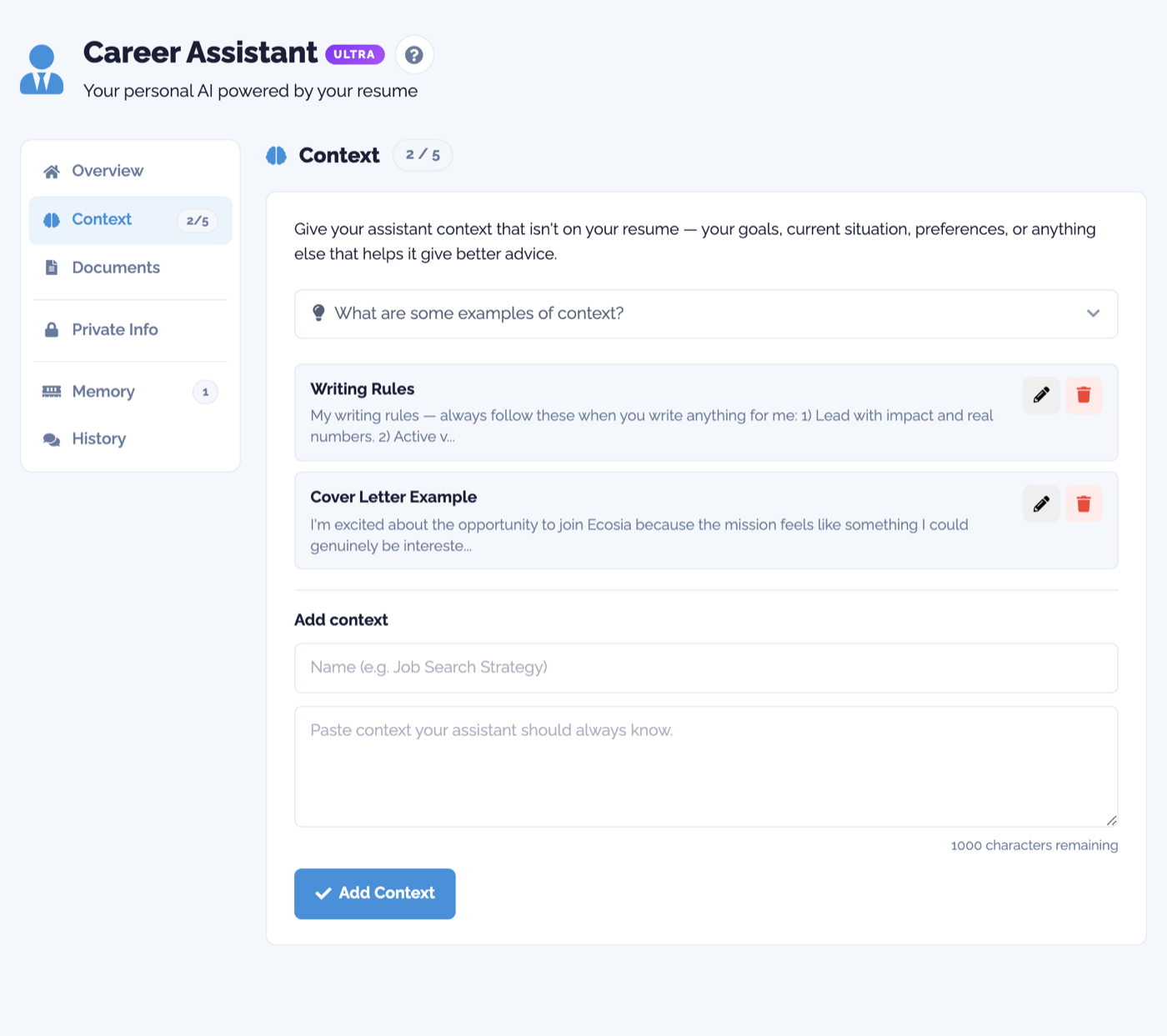
You can also drop in your real background and past projects, so it pulls bullets from things you actually did instead of making them up. That is the whole difference between writing that sounds like everyone and writing that sounds like you on a good day. The more real context you give it, the less robotic the result.
The simple fix
Keep your voice. Use real numbers. Cut anything that does not earn its place. Read the whole thing out loud, and if a line sounds like a robot, rewrite it in the words you would use to tell a friend what you did.
That is the approach we built into Resume Enhancer. It rewrites your rough notes into clean bullets, it works from your real history, and it follows the context you give it, so it stays true to you instead of turning you into everyone else. You can try it for free and see the difference on your own resume.
Ready to try it?
Build an ATS-ready resume, tailor it to every job, and let your AI assistant help you land the interview.
Get started for free